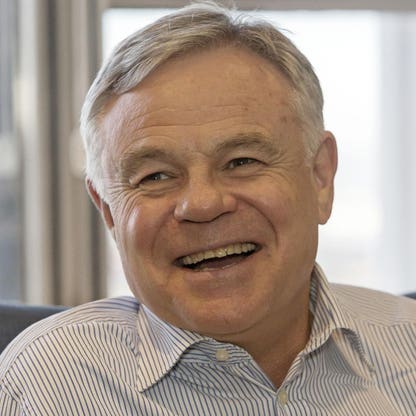
Koos Bekker Net Worth: Unpacking the South African Billionaire's $2.9 Billion Fortune
Koos Bekker stands as a titan in the global media and technology landscape, a visionary whose strategic acumen transformed a regional print media company into a sprawling international internet powerhouse. As of January 2025, his personal fortune, a testament to decades of groundbreaking work, is estimated at an impressive
$2.9 billion. This staggering sum places him firmly among South Africa's wealthiest individuals and highlights a career marked by bold bets, unconventional leadership, and an uncanny ability to spot future trends. His journey from founding a nascent pay-television service to steering massive investments in global tech giants like Tencent offers invaluable lessons in entrepreneurship, long-term vision, and shareholder value creation.
The Architect of Digital Empires: Who is Koos Bekker?
Born Jacobus Petrus Bekker in 1952, Koos Bekker's trajectory began not with immediate tech fame, but with a solid foundation in business and a keen eye for opportunity. After gaining initial experience in the advertising sector, he pursued higher education, earning an MBA from Columbia Business School in 1984. It was during this period that a project paper ignited a spark that would forever change the South African media landscape.
Upon his return, Bekker, alongside a small group of ambitious colleagues, co-founded M-Net, one of the first pay-television services outside the United States. This venture, which later spawned sister companies like MultiChoice, was nothing short of revolutionary for Africa, eventually expanding its reach across 48 countries. M-Net's public listing on the Johannesburg Stock Exchange in 1990 further solidified its status as a pioneering media entity. Bekker's entrepreneurial spirit didn't stop there; in the 1990s, he was also a founding director of the mobile communications giant, MTN, further diversifying his impact on the continent's burgeoning digital infrastructure. These foundational ventures underscored Bekker's ability to identify and capitalize on nascent markets, laying the groundwork for his future, even larger, achievements.
Naspers Transformation: From Regional Player to Global Tech Behemoth
Bekker's career took a pivotal turn in 1997 when he assumed the role of CEO at Naspers. At the time, Naspers was primarily a South African print media and television company, an initial investor in the M-Net/MultiChoice group. Under Bekker's leadership, Naspers acquired the remaining M-Net shareholders, consolidating its position. However, this was just the beginning of a truly transformative era.
Bekker embarked on an audacious strategy to pivot Naspers away from its traditional media roots towards a future dominated by the internet, pay-television, and mobile telephony. This vision led to a series of strategic investments that would fundamentally reshape the company and global technology landscape. The most famous and lucrative of these was the acquisition of a significant stake in the then-unknown Chinese internet firm, Tencent Holdings, in 2001. This foresight proved to be a masterstroke; Tencent, initially an instant messaging service, blossomed into one of the world's most valuable technology companies, with Naspers (now primarily through its global internet assets division, Prosus) maintaining a current stake of around 23%.
The impact of this and other investments, which included the Russian internet company Mail.ru and Brazilian magazine publisher Abril, was monumental. During Bekker's tenure as CEO, Naspers's market capitalization exploded from approximately $1.2 billion to an astonishing $45 billion. Following his step down as CEO in 2014, he returned as chairman in 2015, continuing to guide the group's strategy. Today, the Naspers Prosus group operates in over 130 countries, encompassing diverse sectors of the consumer internet, including classified services, food delivery, and payment systems, boasting a group market capitalization of USD 124 billion. This incredible growth journey illustrates
Koos Bekker's business strategy, marked by aggressive international expansion and early investments in high-growth tech markets. For a deeper dive into these strategic decisions, explore
From M-Net to Tencent: Koos Bekker's Billion-Dollar Business Strategy.
The Unconventional Compensation Strategy: Stock Options, Not Salary
Perhaps one of the most intriguing aspects of Koos Bekker's leadership at Naspers was his highly unconventional compensation model. For fifteen years as CEO, he famously earned no salary, no bonuses, and received no traditional perks. His entire compensation package was structured around stock option grants that vested over time. This unique approach perfectly aligned his personal financial success with the long-term performance and growth of Naspers.
This strategy wasn't just a personal choice; it sent a powerful message to shareholders and the market. It demonstrated an unwavering belief in the company's future and fostered a culture of long-term thinking. By putting his own financial skin in the game so completely, Bekker incentivized himself to make decisions that would maximize shareholder value over many years, rather than focusing on short-term gains. This alignment of interests is often cited as a best practice in corporate governance, encouraging executives to think like owners.
For aspiring business leaders and investors, Bekker's compensation model offers a crucial lesson:
true wealth creation often comes from delayed gratification and a deep commitment to long-term value. It highlights how powerful incentives can be when structured to reward sustained growth and strategic foresight. This approach contributed significantly to his substantial
koos bekker net worth, making him a prime example of an executive whose personal wealth is a direct reflection of the company's success. To understand more about this groundbreaking approach, read
Koos Bekker's Unique Path: No Salary, Just Stock for Billions.
Dissecting the $2.9 Billion: Sources of Koos Bekker's Wealth
Koos Bekker's impressive
$2.9 billion net worth is predominantly derived from his substantial holdings in Naspers and Prosus, the spin-off company that holds Naspers's international internet assets. His stock options, accumulated over years of diligent service and strategic leadership, matured into a significant equity stake as the companies' market capitalizations soared. The astronomical appreciation of the Tencent investment, in particular, has been the primary engine behind this wealth accumulation.
Beyond his corporate holdings, Bekker also owns significant personal assets, including a sprawling 600-acre estate in South Africa, reflecting his deep roots in his home country. However, it is the equity in the global consumer internet group, which operates across Europe, Africa, Latin America, India, and South Africa, that forms the lion's share of his fortune. His current role as chairman of both Prosus and Naspers ensures his continued influence and benefit from the strategic direction of these entities. His wealth is not merely a number; it's a living testament to the power of vision, strategic execution, and the ability to navigate and dominate the complex, ever-evolving digital landscape.
Conclusion
Koos Bekker's journey from a young MBA graduate with an idea to a multi-billionaire chairman of global tech giants is a compelling narrative of innovation and strategic foresight. His
$2.9 billion net worth is not just a personal achievement but a reflection of the immense value he created for shareholders and the transformative impact he had on the global media and internet industries. Through bold investments, an unconventional leadership style, and an unwavering focus on the future, Bekker reshaped not only Naspers but also the way we perceive executive compensation and long-term corporate strategy. His legacy continues to inspire entrepreneurs and business leaders worldwide, proving that with vision and courage, even a regional player can become a global powerhouse.